
Wildlife Study Helps Parks Balance Conservation and Recreation in State Parks

Washington state parks provide precious habitat for wildlife as development continues across the state. But these protected landscapes are also places where people come to hike, bike, and enjoy nature.
As recreation grows, Washington State Parks and Recreation Commission (WSPRC) faces an important challenge: protecting wildlife while maintaining safe, enjoyable outdoor experiences for visitors.
To help surmount this challenge, Washington State Parks Foundation donors supported a scientific study on wildlife activity in state parks, providing critical, on-the-ground insight for conservation and recreation planning. Today, land managers are using those findings to help determine where and when to permit events, positioning Washington State Parks as a leader in using wildlife research to inform land management and conservation.
Donors Funded a Much-Needed Wildlife Study
Understanding how to best manage land requires research where humans and animals cross paths in parks.
Thanks to generous support from Washington State Parks Foundation donors, a multi-year wildlife research fund at the University of Washington helped make possible a new study on wildlife activity in eight state parks. Additional funding from the Conservation, Research and Education Opportunities International (CREOi) and the Wildlife Forever Fund supported this important work.
Since areas where wildlife and human recreation overlap remain relatively understudied, the findings are valuable not only for Washington State Parks but also for other public land agencies facing similar challenges.
University of Washington (UW) M.S. student Marcela Todd Zaragoza, working alongside UW School of Environmental and Forest Sciences researchers, designed the study to identify which wildlife species live in parks and how recreation influences their activity across different landscapes and levels of use. Camera trap data, interviews with land managers, and extensive analysis produced findings that are now informing park planning.
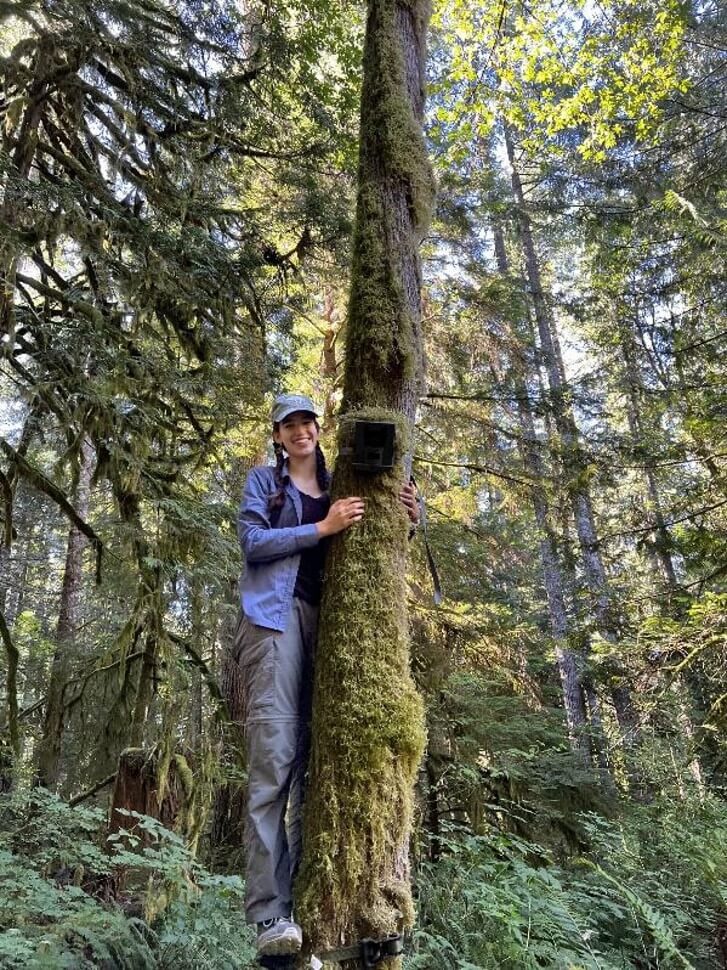
Cameras Captured Wildlife Across Eight Washington State Parks
In 2021 and 2022, Washington State Parks installed wildlife cameras in eight state parks: Larrabee, Moran, Beacon Rock, Fort Ebey, Olallie, Wallace Falls, Deception Pass, and Squak Mountain. These parks experience relatively high levels of recreation, including through trail running and mountain bike races, making them ideal locations to study how wildlife and people share the land.
Researchers used Strava Heatmaps to identify low-, medium-, and high-use recreation areas, creating a valuable framework for understanding how varying levels of trail use influence wildlife that may also be useful for land managers.
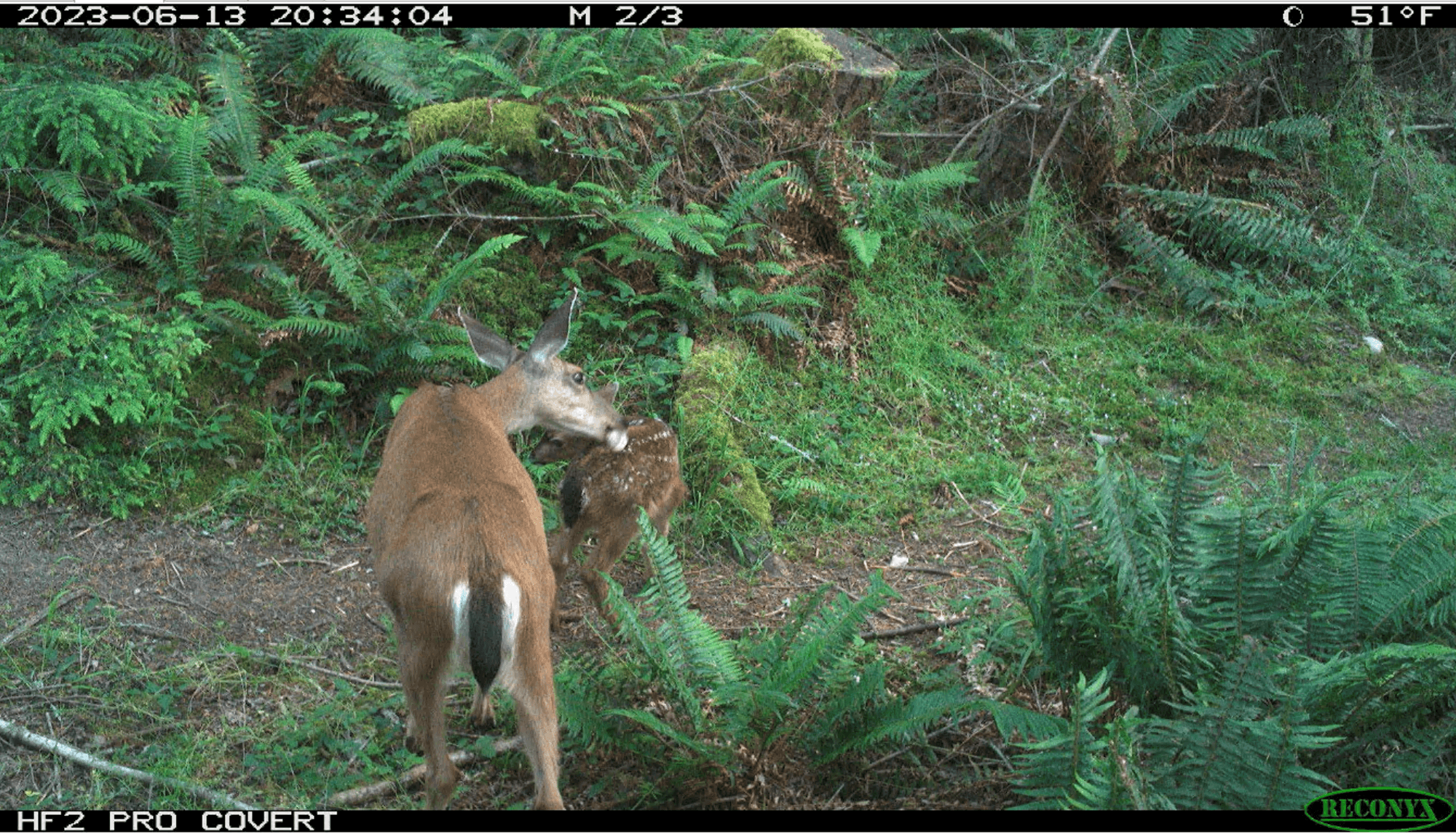
The cameras caught an impressive diversity of wildlife in these eight parks, including black-tailed deer, coyotes, bobcats, elk, black bears, and the endangered fisher species. Finding fishers in the Cascades was especially important as Washington State spent five years reintroducing fishers to the area after habitat loss and overtrapping led to dramatic population decline.
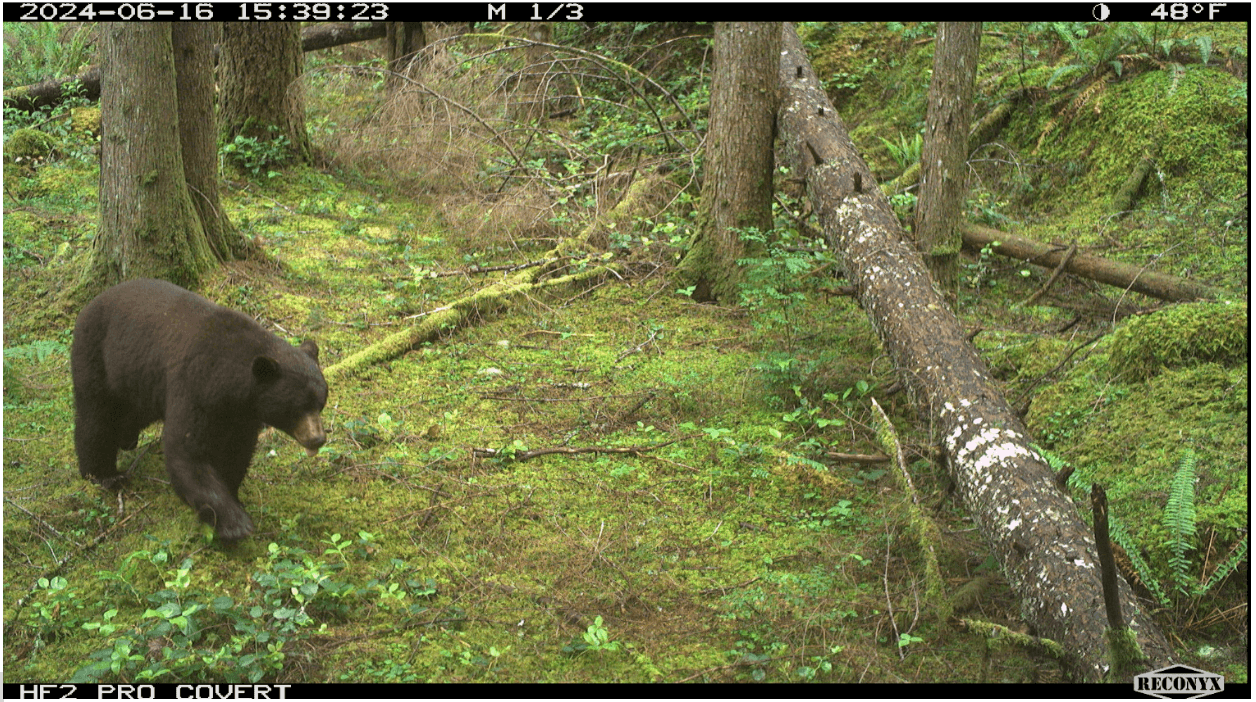
The UW study found that wildlife activity generally declined in the places and at the times when human recreation was highest, suggesting many animals avoid people to reduce potential stressors. Even deer, which are more used to humans than other species, preferred lower-use areas.
The study also revealed differences among species, helping
Washington State Parks understand the impacts of recreation on the wide
range of wildlife that call these parks home.
Interviews with Land Managers Reveal Competing Priorities in Land Management
To be most useful, it is important for wildlife research to be accessible to parks agencies to inform real-world decisions. For example, actionable recommendations can help land managers implement scientific findings directly to park permitting.
To understand how research findings are used in day-to-day land management, UW researchers also conducted 14 interviews with public land managers.
Land managers consistently described a growing need to protect wildlife while making recreation sustainable over the long term, particularly following the surge in visitation to public lands after the COVID-19 pandemic. As recreation continues to increase, managers emphasized that habitat conservation is rising in importance during land management decisions.
At the same time, interviews revealed that land managers must balance conservation goals with the needs and priorities of government agencies, Tribal partners, local communities, and park visitors. Combined with limited staff and resources, these competing priorities mean that implementing science-based management is not always straightforward.
Managers emphasized the importance of research in guiding decisions while recognizing that successful land management also depends on operational experience and on-the-ground knowledge.
Continued collaboration between researchers and land managers, including through efforts to bridge understanding through studies like these, will help close the gap between science and practice, supporting more sustainable recreation across Washington state parks.
Research that Helps Wildlife and Visitors Safely Share Parks
The study's findings are already helping land managers make decisions that reduce recreation impacts on wildlife.
For example, land managers are exploring preserving low-use recreation areas to give wildlife more space away from heavily visited trails, along with limiting recreation after daylight hours so animals have time to feed and travel with fewer human disturbances.
Thanks to efforts like these, WSPRC has emerged as a leader among state land agencies in assessing wildlife activity levels, with this study providing key data to advance understanding of how human activity influences wildlife patterns on park lands. The findings are helping shape broader agency practices and positioning WSPRC as a resource for other organizations seeking to balance recreation and wildlife conservation.
As Washington State Parks works to reduce the impact of recreation on Washington’s natural habitats, studies like this provide the evidence needed to understand where and how people and wildlife share the landscape. By turning these findings into strategies for recreation planning, land managers can continue creating parks where visitors enjoy unforgettable outdoor experiences while wildlife retains the habitat it needs.
Thank you to the Washington State Parks Foundation donors, funders, and researchers for making this important study possible.


